Understanding the Soil Health Card Scheme for Your Exams
Hello friends! If you are preparing for government exams, you know that understanding government schemes is very important. Many questions in the General Knowledge section come from these topics. Today, we are going to learn about a very special and helpful program started by the Government of India. It is called the Soil Health Card Scheme. This scheme is not just good for our farmers, but it is also a popular topic for exam questions. So, let’s understand everything about the Soil Health Card Scheme in very easy English. This guide will help you answer any question about it.
What is the Soil Health Card Scheme?
Imagine you have a report card from school. It tells you which subjects you are good at and where you need to improve. The Soil Health Card Scheme provides a similar report card, but for the soil of a farmer’s field. This card gives farmers detailed information about the health of their soil. It tells them about the nutrients present in the soil and which nutrients are missing. Based on this report, farmers get expert advice on which fertilizers to use and in what quantity. This helps them to grow healthier crops and get a better harvest. The main idea is to help farmers make smart decisions for their farms. It promotes using the right amount of fertilizers, which is good for the soil and also saves the farmer’s money.
A Quick Overview of the Scheme
To get a clear picture, let’s look at some basic details of this wonderful scheme. This table will give you all the key information at a glance. It’s great for quick revision before an exam.
| Particulars | Details |
|---|---|
| Scheme Name | Soil Health Card Scheme |
| Launched By | Government of India |
| Launch Year | 2015 |
| Main Beneficiary | Farmers of India |
| Ministry Involved | Ministry of Agriculture & Farmers Welfare |
Why is this Scheme Important for India?
The Soil Health Card Scheme is a game-changer for Indian agriculture. Its importance can be seen in many ways. Firstly, it directly helps our farmers. For years, many farmers used fertilizers based on guesswork. This often led to using too much or the wrong type of fertilizer. This practice not only wasted money but also damaged the soil’s long-term health. With the soil health card, farmers know exactly what their soil needs. This leads to a balanced use of fertilizers, reducing their costs and increasing their profits. When farmers earn more, their lives improve.
Secondly, the scheme is great for the environment. Excessive use of chemical fertilizers pollutes the soil and water. By promoting need-based fertilizer use, the Soil Health Card Scheme helps in protecting our environment. Healthy soil can hold more water, which is very useful in areas with less rainfall. It also improves the overall ecosystem. Finally, for the country, this scheme helps in increasing food production. When farms are more productive, it ensures food security for our large population. So, this single scheme has benefits for the farmer, the environment, and the entire nation.
How Does the Soil Health Card Scheme Work?
The process of the Soil Health Card Scheme is very simple and systematic. It is done step-by-step to ensure accuracy and efficiency. Let’s understand the journey from collecting a soil sample to giving the card to the farmer.
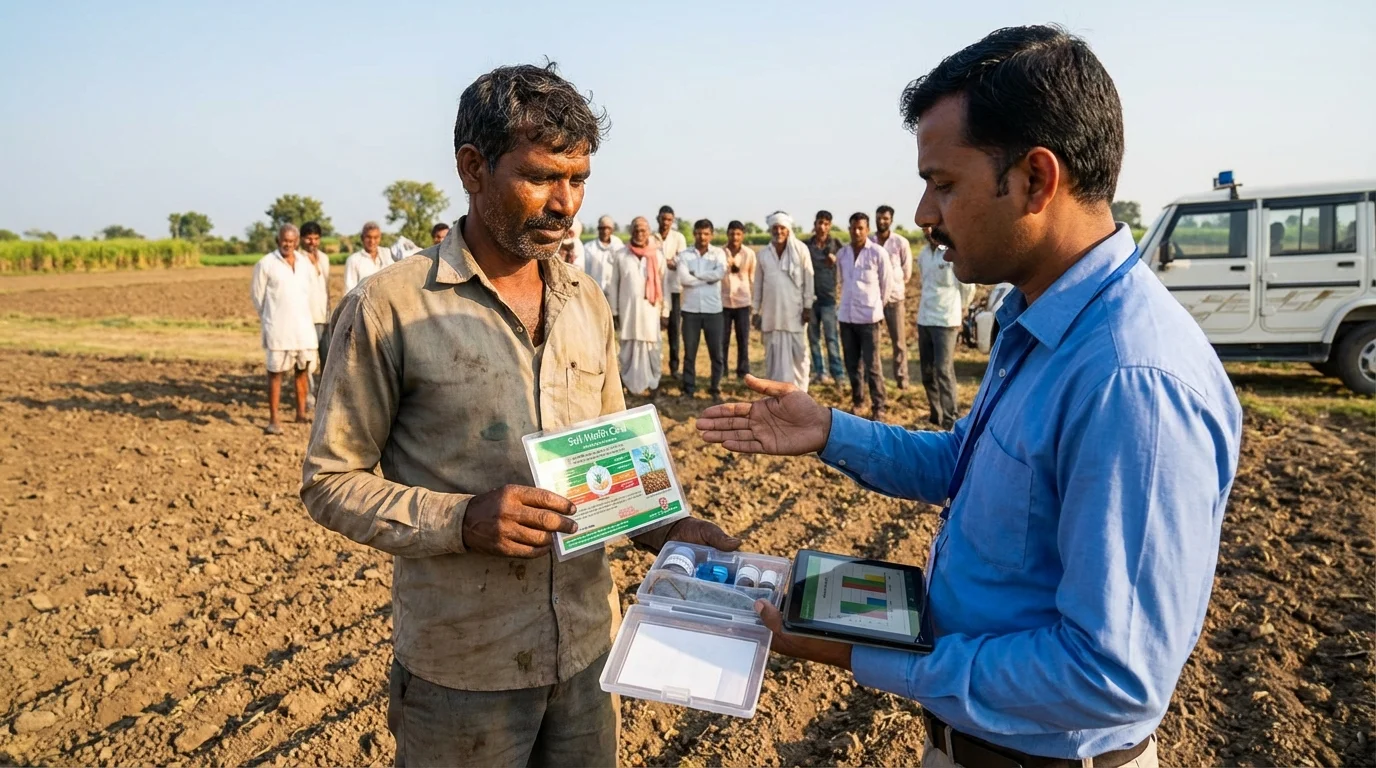
- Collecting Soil Samples: Trained personnel, often from the state’s Agriculture Department, go to the farms. They collect soil samples from different parts of a field using a proper scientific method. This ensures the sample truly represents the entire field. Samples are collected from a grid, one from a 10-hectare area in rainfed regions and one from a 2.5-hectare area in irrigated regions.
- Testing in a Laboratory: After collection, these samples are sent to special soil testing laboratories. There are many such labs set up across the country. In the lab, experts test the soil for 12 important parameters or nutrients. This includes major nutrients, secondary nutrients, and micronutrients.
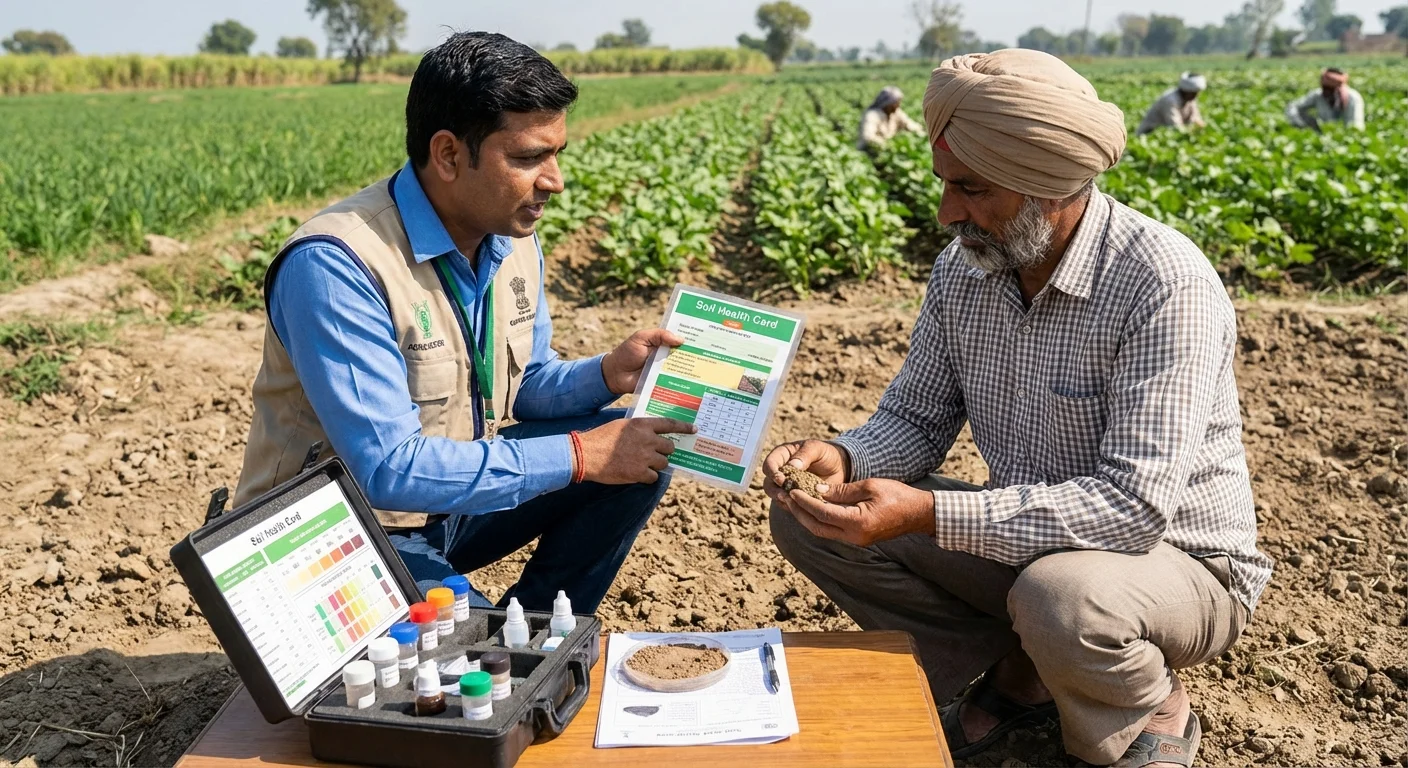
- Generating the Card: Based on the test results, a detailed report is prepared. This report is the Soil Health Card. It is a printed card that contains the status of the soil’s health and recommendations for improving it. The information is often provided in the local language so that farmers can easily understand it.
- Distribution and Guidance: The prepared cards are then given to the farmers. Along with the card, agricultural officers or experts often explain the report to the farmers. They guide them on how to use the information to improve their farming practices. The Soil Health Card Scheme ensures that a new card is issued every 2 years, so farmers always have updated information about their soil.
Key Features of the Scheme
The Soil Health Card Scheme has several features that make it very effective. Understanding these features is important for your exam preparation. Let’s look at them in this table.
| Feature | Description |
|---|---|
| Regular Testing | Soil is tested once every 2 years to track changes in its health. |
| Comprehensive Analysis | Tests 12 key parameters for a complete soil health profile. |
| Customized Advice | Provides specific fertilizer and crop recommendations for each farm. |
| Free of Cost | The soil testing and the card are provided to farmers for free. |
| Nationwide Coverage | The scheme aims to cover all farmers across the country. |
What Nutrients are Tested?
When we say the soil is tested, what exactly is checked? The soil testing labs check for 12 important parameters to understand the soil’s condition. These are divided into different groups. Knowing these can fetch you extra marks in your exam.
| Nutrient Category | Parameters Tested |
|---|---|
| Macronutrients | Nitrogen (N), Phosphorus (P), Potassium (K) |
| Secondary Nutrient | Sulphur (S) |
| Micronutrients | Zinc (Zn), Boron (B), Iron (Fe), Manganese (Mn), Copper (Cu) |
| Physical Parameters | pH, Electrical Conductivity (EC), Organic Carbon (OC) |
Job Roles Associated with the Soil Health Card Scheme
For government job aspirants, it is also interesting to know that a large-scale program like the Soil Health Card Scheme creates many employment opportunities, especially in rural areas. It needs a skilled workforce to run smoothly. Some of the job roles include:
- Soil Sample Collectors: These individuals are trained to collect soil samples from fields using the correct procedure.
- Lab Technicians and Assistants: They work in the soil testing laboratories. Their job is to test the soil samples accurately using scientific equipment. A background in science, especially chemistry or agriculture, is often required for these roles.
- Agriculture Extension Officers: These government officers work at the block or district level. They play a crucial role in distributing the cards and explaining the recommendations to the farmers. They bridge the gap between the lab and the field.
- Data Entry Operators: A lot of data is generated through this scheme. Operators are needed to enter the test results and farmer details into the national portal for the Soil Health Card Scheme.
These jobs are often filled through state government recruitment drives or on a contractual basis through agricultural departments. Keeping an eye on notifications from your state’s agriculture university or department can be useful if you are interested in this field.
Read More: Pradhan Mantri Mudra Yojana (PMMY) 2026
Important Links for More Information
If you wish to read more about the Soil Health Card Scheme or check the official data, you can visit the government websites. Here are the important links.
| Link Type | URL |
|---|---|
| Official Website | Click Here |
| Scheme Information | Click Here |
| Farmer Portal | Click Here |
Conclusion
The Soil Health Card Scheme is more than just a government program. It is a scientific tool in the hands of our farmers that empowers them to make better decisions. By promoting the balanced use of fertilizers, it improves crop yield, increases farmers’ income, and protects the environment. For students preparing for competitive exams, the Soil Health Card Scheme is a very important topic. Understanding its objectives, working, and benefits will surely help you score well. It represents a modern and sustainable approach to agriculture in India, making it a proud initiative for the entire country.
Frequently Asked Questions
1. What is the main aim of the Soil Health Card Scheme?
The main aim is to issue a ‘health card’ for soil to every farmer in the country, which will help them use fertilizers and other nutrients correctly based on their soil’s needs.
2. Who is eligible to get a Soil Health Card?
All farmers in India are eligible to get a Soil Health Card for their land holdings, free of cost.
3. How often is a Soil Health Card issued?
A Soil Health Card is issued once every two years for the same piece of land. This helps farmers track the changes in their soil’s health over time.
4. Is the Soil Health Card free for farmers?
Yes, the entire process, from soil sample collection and testing to the delivery of the card, is completely free for all farmers.
5. How many parameters are tested in the soil sample?
A total of 12 parameters are tested. This includes macronutrients (N, P, K), a secondary nutrient (S), micronutrients (Zn, Fe, Cu, Mn, B), and physical parameters (pH, EC, OC).
6. In what language is the card provided?
The card is printed and provided in the local language of the farmer, so they can read and understand the information and recommendations easily.
7. Who collects the soil samples from the fields?
Trained staff from the State Department of Agriculture or outsourced agencies collect the soil samples in a systematic way.